Middle Managers: The Overlooked Change-Makers
Middle managers are often stretched thin across team demands, shifting strategies, and constant organisational change. Yet research shows they are one of the most powerful leverage points for transformation. This article explores why middle managers matter, the hidden risks they face, and how practical tools like collabbWAY’s ARCA+ 1:1 Framework and R3 Insight Reflection Model can equip them to lead with clarity, connection, and confidence.
LEADERSHIP DEVELOPMENTARCA+ PROFESSIONAL 1:1
Brooke Baxter | collabbWAY
9/30/20254 min read


Middle Managers: The Overlooked Change-Makers
Not long ago, I was facilitating a workshop with a group of middle managers. At one point, someone said quietly: “We are expected to be across every part of the team, every shift in the organisation, every change initiative, but no one ever stops to ask, how are you managing all of this?”
The room fell silent. It was a raw truth. Middle managers hold the operational detail, manage the dynamics of people and teams, and absorb the human weight of change. Often without the support they need.
That moment stayed with me as it is something I have always known and felt. This tension often plays out in the middle, where managers need to turn organisational vision into everyday practice.
Yet, middle managers are also one of the most burned-out groups and can be under-supported in organisations. A recent Australian survey found that 73% of middle managers reported experiencing burnout, and more than 80% stated they had received little to no leadership development after their promotion (Capterra, 2023).
This figures are striking. Despite being stretched thin, middle managers remain one of the most significant leverage points for transformation.
The Evidence
Middle managers drive performance.
Research by McKinsey shows that organisations with high-performing middle managers report stronger organisational health and improved financial performance (Desmidt, 2016; McKinsey & Company, 2022). These managers act as connectors, aligning strategic intent with daily operations and fostering environments that promote healthier workplace cultures.
Middle managers play a crucial role in shaping how employees experience change.
In change settings, middle managers do more than communicate new processes. A study of 326 employees during a merger found that when managers maintained strong leader–employee relationships, staff reported greater access to information, more participation in change, and lower levels of cynicism (Rafferty & Restubog, 2010). This demonstrates that middle managers have a direct influence on employees’ emotional responses to change.
Middle managers as change agents, not just implementers
While they have often been viewed as passive implementers, more recent scholarship positions middle managers as active agents of change. They interpret strategy, diffuse knowledge, and contribute to sensemaking processes that shape both operational and strategic outcomes (Balogun, 2003; Wooldridge, Schmid, & Floyd, 2008).
The risk of neglect
Despite this, middle managers are at risk of role overload and burnout. McKinsey highlights that middle managers often operate in a ‘purpose gap,’ balancing pressures from above and below without sufficient support (McKinsey & Company, 2022). When neglected, this group becomes a bottleneck rather than a bridge.
The Teaching Moment
So, what can organisations do differently? Here are three reflective leadership practices I share in my coaching and development work. They help middle managers move beyond task execution to genuine leadership for change.
Translate both ways
Middle managers sit in the middle of two conversations — what the organisation wants and what the team experiences. The skill is learning to translate in both directions: turning strategic goals into clear, practical steps the team can act on, and carrying team insights back up to senior leaders in a way that influences decision-making.A useful reflective exercise is to sit down with a senior leader and walk through this ‘double translation’ together. Take one strategic goal and explain how you have framed it for your team. Then, take one piece of frontline feedback and share how you would frame it upwards. Notice what gets lost, what gets reshaped, and how clarity (or assumptions) shift along the way.
Check in relationally
Change is not just technical; it is people-centred and can be emotional. Managers can apply the ‘Three A’s’ when supporting their people:Ask how people are feeling and experiencing the work.
Acknowledge their experiences.
Address what support or clarity is needed.
This simple exercise helps build trust and reduce resistance during tricky moments.
Pause to make sense
Complex change requires reflection. After major change events, middle managers should conduct a brief debrief with their teams using the R³ = Insight Reflective Model by collabbWAY. This looks like:Recognise – understanding what is happening right now?
Reframe – how else can I understand this?
Refocus – where do we place our attention next?
(collabbWAY, 2025)
Final Reflection
I have seen this play out time and again: when middle managers are trusted and supported, they stop being the ones holding everything together under pressure and start becoming the drivers of progress. Change does not reside solely in a strategy document. It resides in the daily conversations, decisions, and sense-making that occur in the middle. If we want the transformation to last, we need to start by investing there.
References
Balogun, J. (2003). From blaming the middle to harnessing its potential: Creating change intermediaries. British Journal of Management, 14(1), 69–83. https://doi.org/10.1111/1467-8551.00266
collabbWAY. (2025). R3 = Insight Reflection Model. ARCA+ Professional 1:1 Framework. collabbWAY Leadership Resources.
Capterra. (2023). Burnout in Australia’s middle managers: Survey report. Retrieved from https://www.capterra.com.au/
Desmidt, S. (2016). The Relevance of Middle Managers in Strategy Implementation: The Need for a Holistic View. Journal of Management Policy and Practice, 17(2), 26–38.
McKinsey & Company. (2022). Investing in middle managers pays off. Literally. Retrieved from https://www.mckinsey.com
Rafferty, A. E., & Restubog, S. L. D. (2010). The impact of change process and context on change reactions and turnover during a merger. Journal of Management, 36(5), 1309–1338. https://doi.org/10.1177/0149206309341480
Wooldridge, B., Schmid, T., & Floyd, S. W. (2008). The Middle Management Perspective on the Strategy Process: Contributions, Synthesis, and Future Research. Journal of Management, 34(6), 1190–1221. https://doi.org/10.1177/0149206308324326
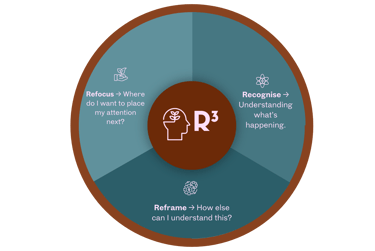
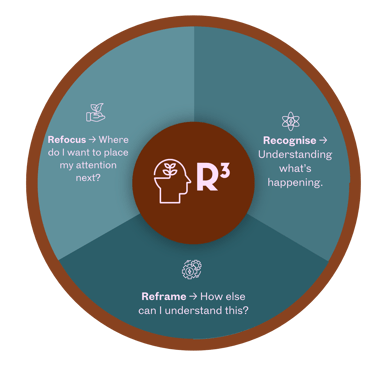
R3 = Insight Reflection Model
© 2025 collabbWAY. All rights reserved.


Website by collabbWAY
Based in Geelong