
What is relational leadership?
How people experience you as a leader is the work, not a side issue. You don't get results despite people — you get results through them.
Explore the ideaConnection before correction.
Leadership is changing
For a long time, leadership was about the person at the top. The confident decision-maker, the visionary, the one with the answers.
The research has moved on. Over the last few decades, leadership studies have shifted away from the “born leader” towards what leaders actually do, day to day, with the people in front of them. A 2025 review by the Australia and New Zealand School of Government looked at 30 years of reports on relational leadership and found it consistently linked with productivity, innovation and how well teams learn.
Workplaces are feeling it too. Managers are carrying more people, more change and more pressure than ever. The old playbook of “set the target and hold them to it” isn't holding up. What's replacing it is leadership built on trust, honest conversations and steadiness under pressure. Not as a nice extra, but as the way work gets done.

What it looks like on a normal day
- Someone's gone quiet in team meetings. You notice, and check in one-on-one before it turns into a performance issue.
- Before you raise a mistake, you make sure they know you're on their side.
- A team member pushes back hard. You stay in the conversation instead of shutting it down or giving in.
- You're under pressure and want to fire off an email. You pause long enough to choose your response.
- A conversation goes badly. You go back the next day and repair it, instead of hoping it passes.
None of this is complicated. It's just easy to skip when you're busy, and most managers are busy.
Why it works
The research lines up with what good managers already sense.
The quality of the relationship between a manager and each team member is one of the strongest predictors of performance and engagement (Graen & Uhl-Bien, 1995).
Teams learn and perform better when people feel safe to speak up, and that safety comes from specific things leaders do, like inviting input and not getting defensive when challenged (Edmondson, 1999).
Stress affects the part of the brain we use for judgement and decision-making (Arnsten, 2009). A stressed leader has less access to their own thinking, which is why steadying yourself comes first.
Putting what's happening into words calms the brain's threat response (Lieberman et al., 2007). Naming isn't a soft skill. It's how people settle enough to think.
And leadership training works best when people practise on real situations, get feedback and use it straight away at work (Lacerenza et al., 2017).
Where this comes from

I spent 21 years in social work and community services, in family violence, mental health, and child and family services. Social work has always treated the relationship as the tool. You bring yourself into the work, you name what's going on, and you deal with power and behaviour openly instead of pretending they're not there.
Workplaces aren't that different. They just don't always notice.
The Relational Leadership Method (RLM)
RLM turns relational leadership into specific things a manager can learn and do. It's 30 leadership practices.
Four foundational practices are about leading yourself first: knowing your values, owning your authority, managing self-doubt and holding boundaries. If you're not steady, everything else is harder.
Then 26 relational skills across six lenses:
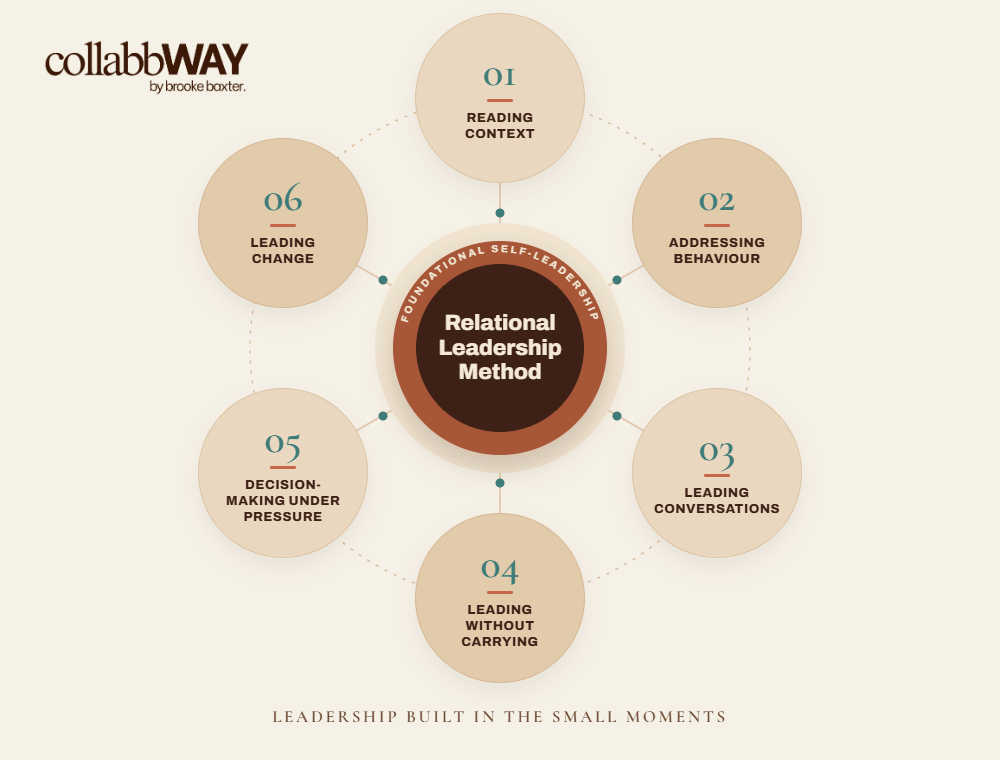
- Reading Context: understanding what's actually going on before you act
- Addressing Behaviour: naming things clearly and early, before they become patterns
- Leading Conversations: starting, staying in and finishing the hard ones without damaging trust
- Leading Without Carrying: growing your people instead of doing it all yourself
- Decision-Making Under Pressure: thinking clearly when everything speeds up
- Leading Change: the human side of change, how it's landing and what people need
Every practice comes with the actual language to use, what avoiding it looks like, and what gets in the way.
Alongside it are models for specific moments: ALIGN for feedback, ARCA+ for better 1:1 meetings and REAL for conflict.
Relational doesn't mean soft
this one surprises people
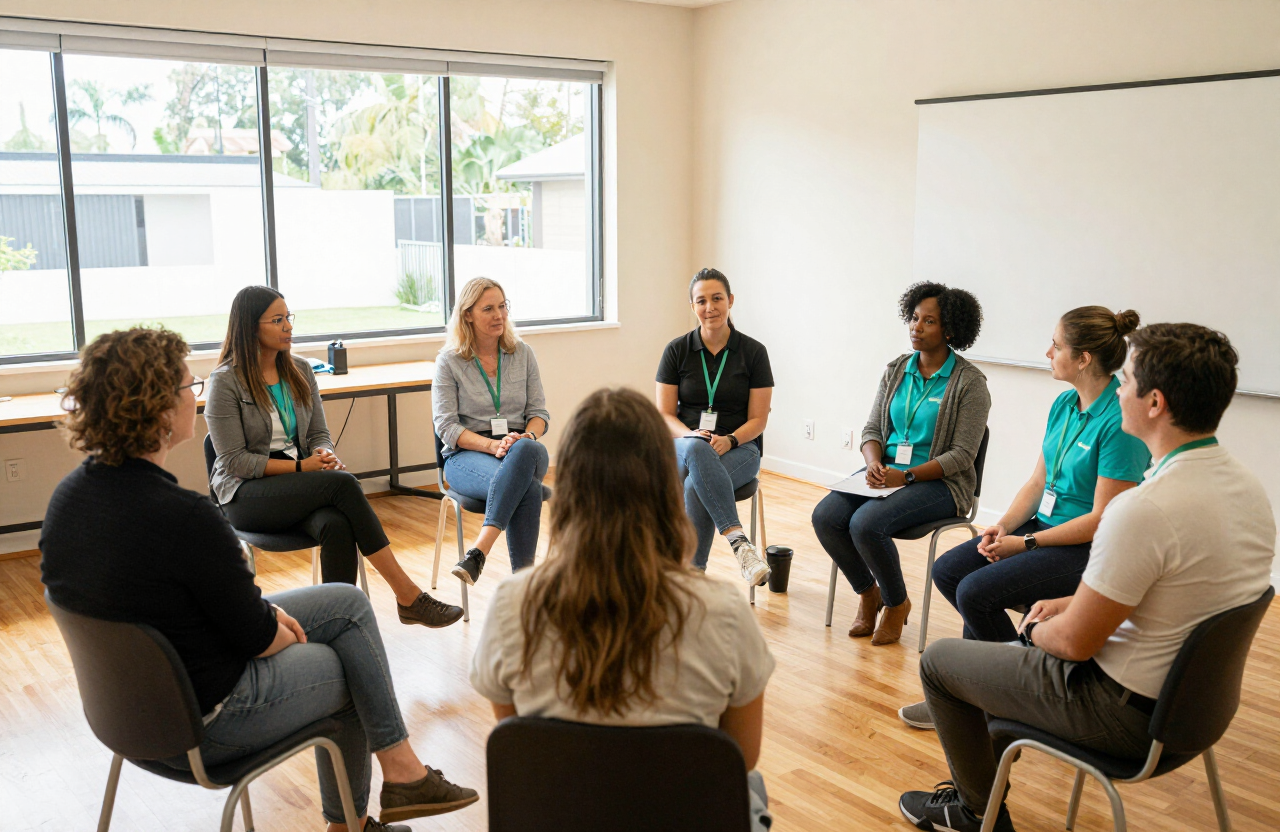
It often means having the hard conversation sooner, because the relationship can hold it. RLM's directness comes straight from social work, where avoiding the issue is never the kind option.
Want more of this?
Leadership in Practice brings it to your inbox, one real moment at a time.
Bringing it into your organisation
We work with organisations through leadership development, coaching and team work built on RLM.
Talk to us about your teamFor individual managers:
Start with the free guide